Craftsmanship

Made the long way

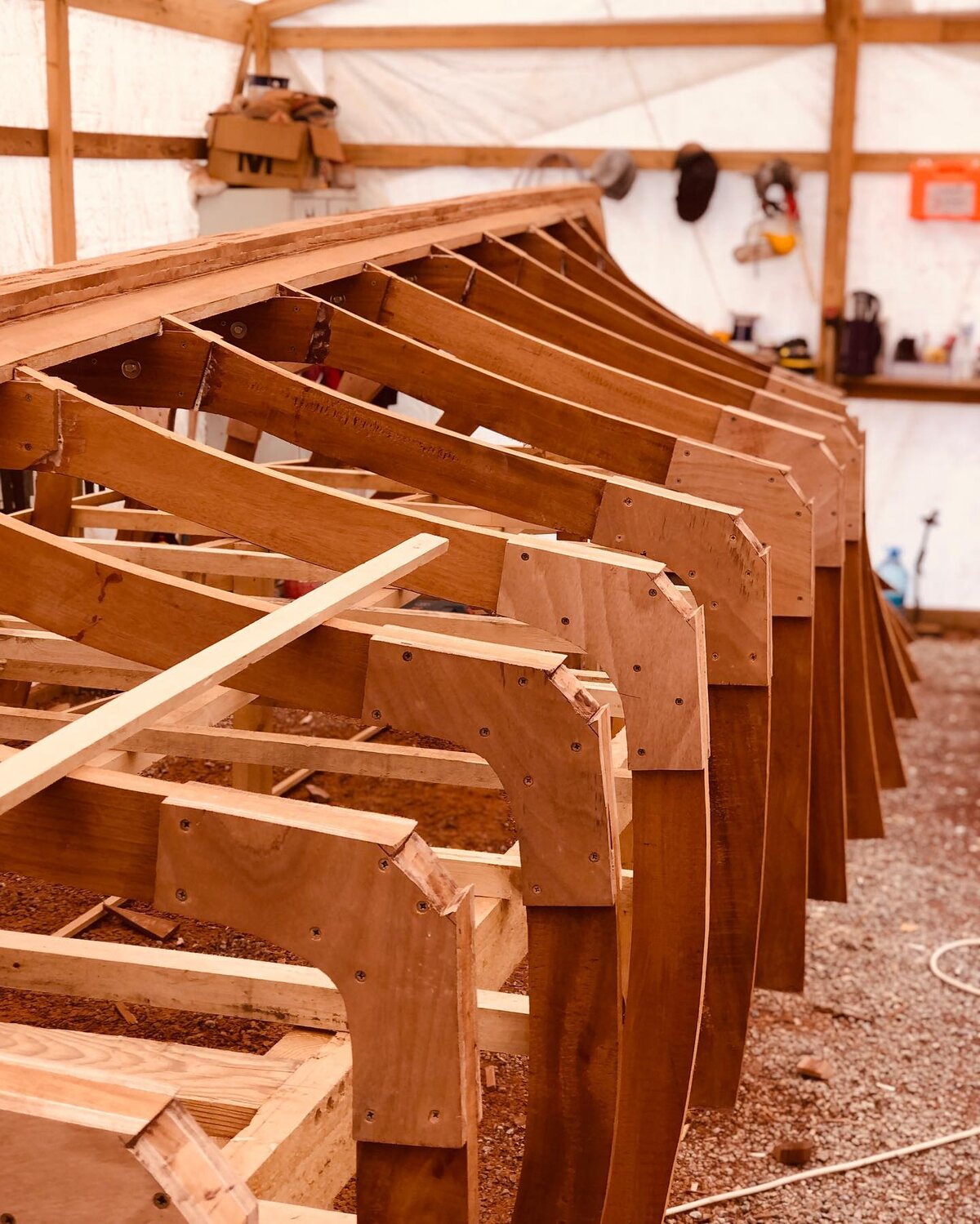
Every photograph on this page was taken inside our own workshop in Bozburun. There is no shortcut hidden anywhere in a Frida.

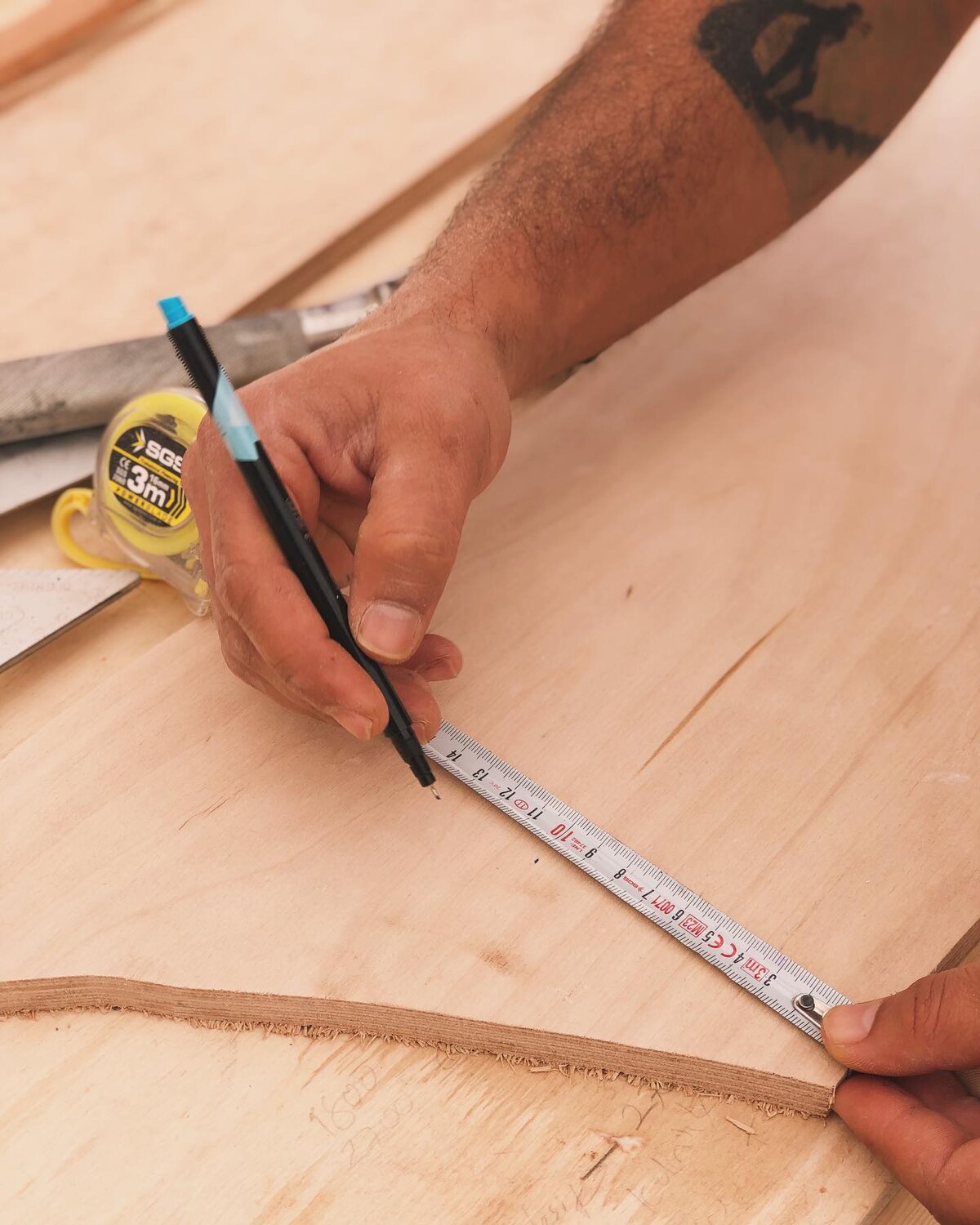
Marking out timber with pencil and tape measure in the Frida workshop

The timber

Measured three times, cut once

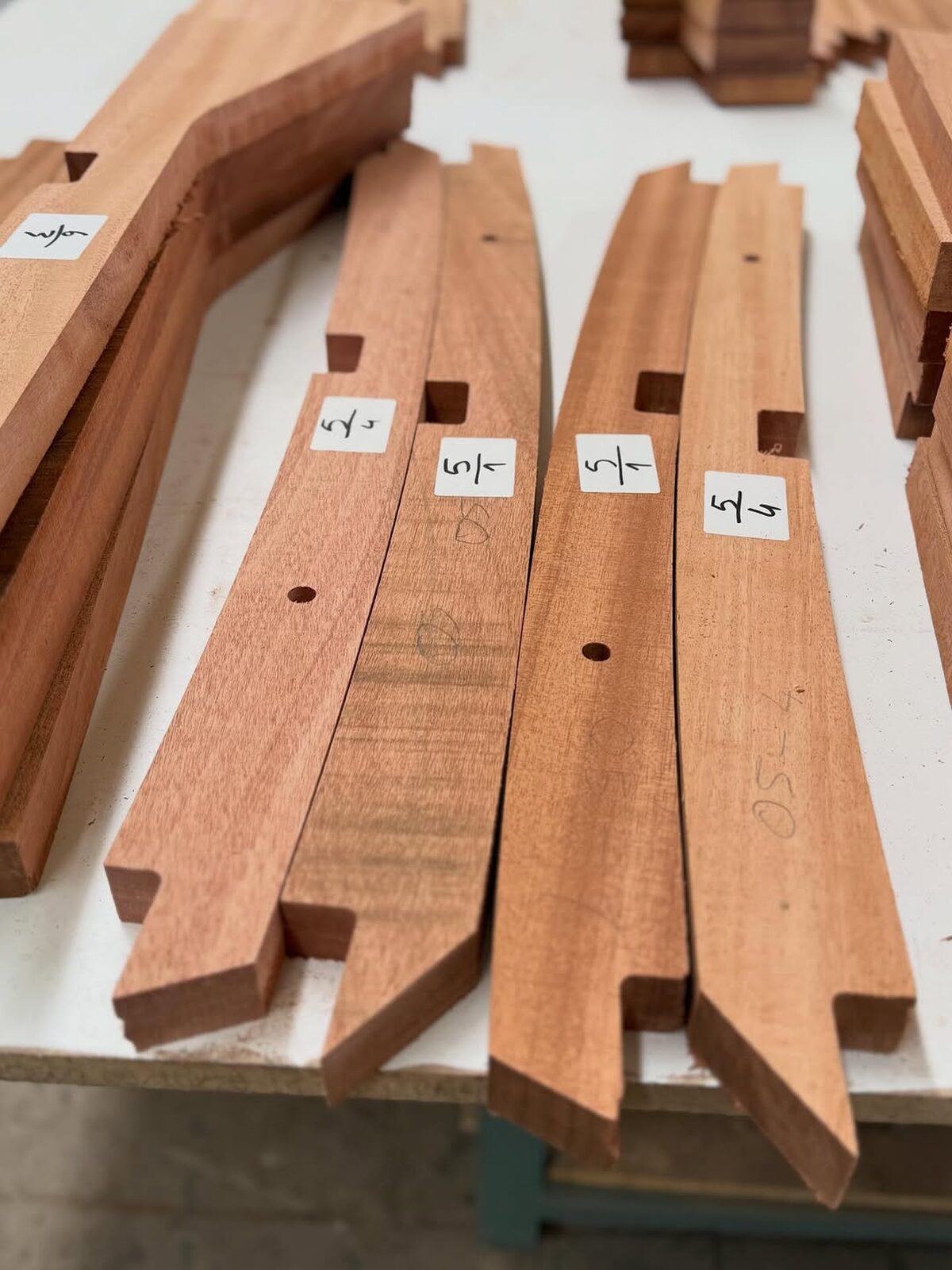
Everything begins on the lofting bench: templates are drawn, checked and transferred to solid akaju — African mahogany — before a single saw cut. The yard's rule is written on its walls: measure three times, cut once, and let every piece prove itself before it moves on.

Frames are numbered to their hull, keels are shaped from 100-millimetre mahogany, and the offcuts still end up as cleats and tillers.

In the detail

Solid akaju & sapelli mahogany · templates for every frame · parts numbered to the hull · nothing stained, ever
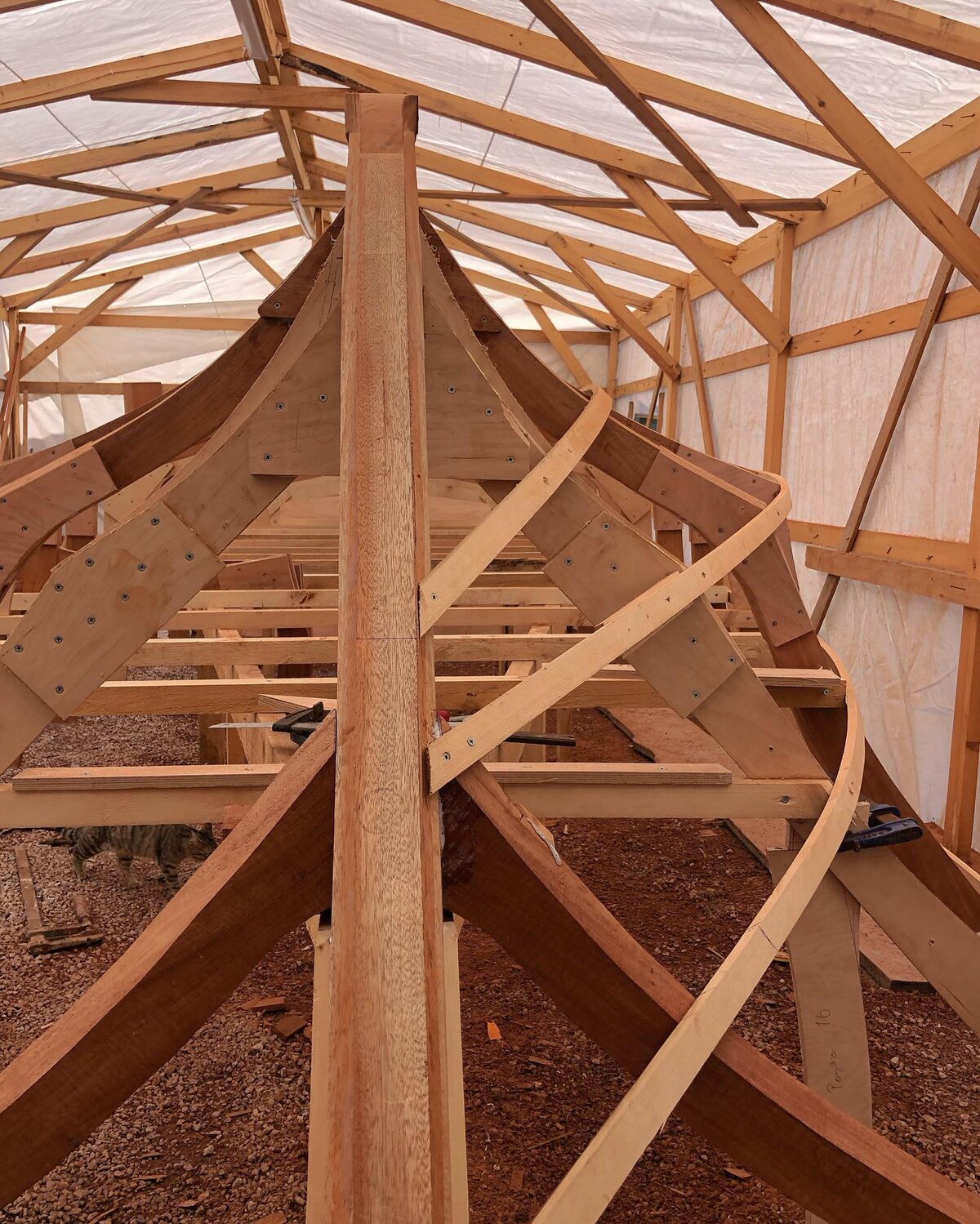
Completed frame skeleton of a hull seen from the bow

The structure

Frames, brackets, stringers

The skeleton comes first: steam-shaped frames stand one by one, then brackets turn separate parts into a single load-bearing system, and stringers run the length of the hull to spread every wave the boat will ever meet. Nothing here is approximate — each joint is measured, marked, cut and verified before the next.

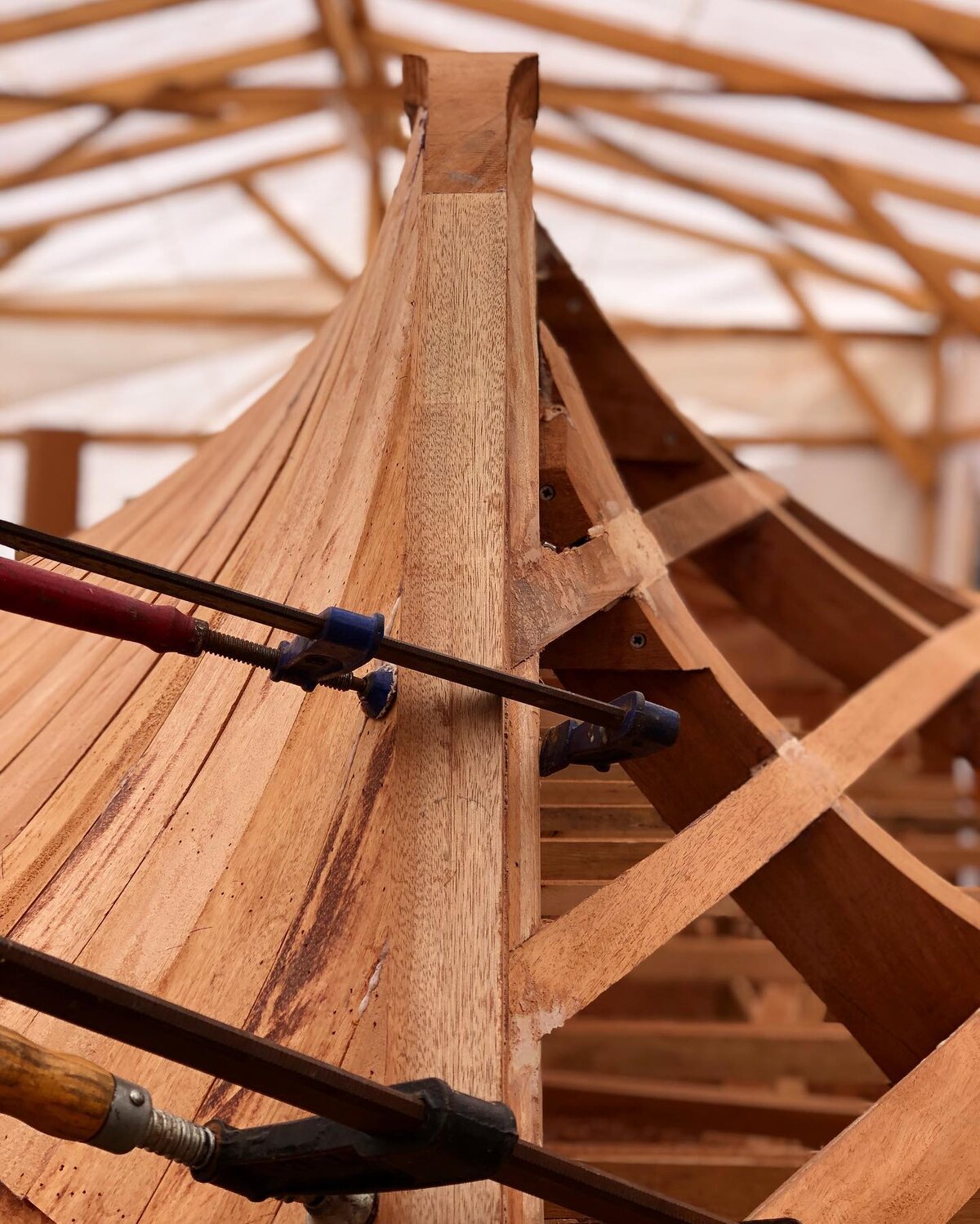
Keel and stem are laminated layer on layer with microfibre-filled epoxy, clamped and cured until the structure works as one piece.

In the detail

Laminated keel & stem · microfibre epoxy bonding · brackets and stringers verified joint by joint · the skeleton decides everything

First planking layer clamped over the bow structure

The planking

Three skins of mahogany

The hull is skinned cold-moulded, in three crossing layers: okoume underlayers first, then four-millimetre sapelli laid with the grain matched sheet by sheet. Each piece is fitted to the hull's geometry, glued, clamped and faired before the next layer crosses it.

The result never dries out and never takes up — a hull that looks 1955 and behaves like the 2020s, with the designed lines held from first plank to last.

In the detail

Cold-mold, three crossing layers · okoume + 4 mm sapelli · glass & epoxy below the waterline · grain matched by eye

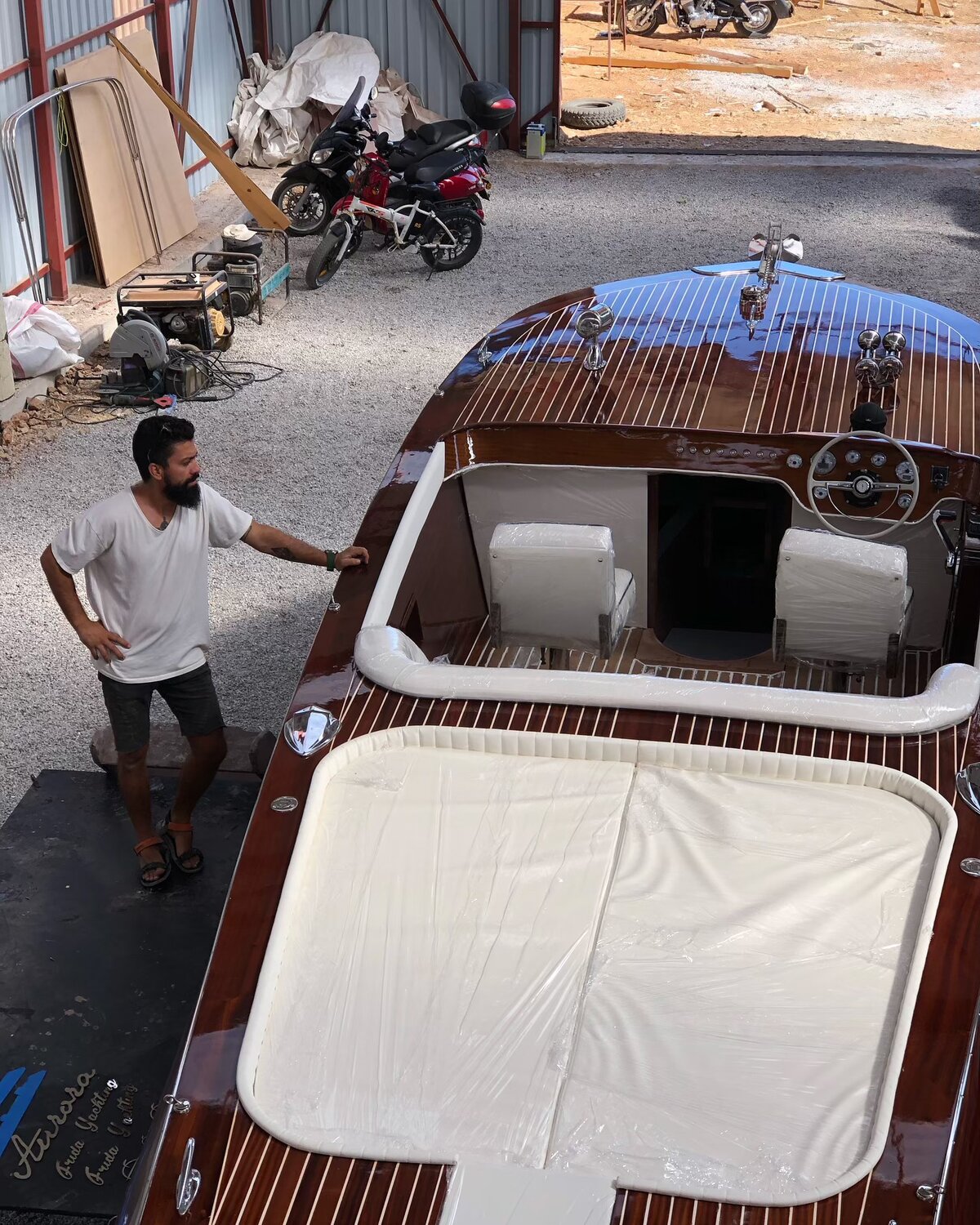
Finished Aurora 27 deck in mirror varnish inside the shed

The finish

Varnish you can read by

Varnish is the slowest room in the yard, and its signature. Coat after coat is laid, cured and sanded until the mahogany grain seems to sit a centimetre below glass — the finish that stops people on the dock three years after launch.

The metalwork gets the same patience: hand-polished chrome and stainless, classic dial instruments, and not one careless fastening in sight.

In the detail

Multi-coat two-part varnish · hand rubbed between coats · chrome & stainless brightwork · bring sunglasses

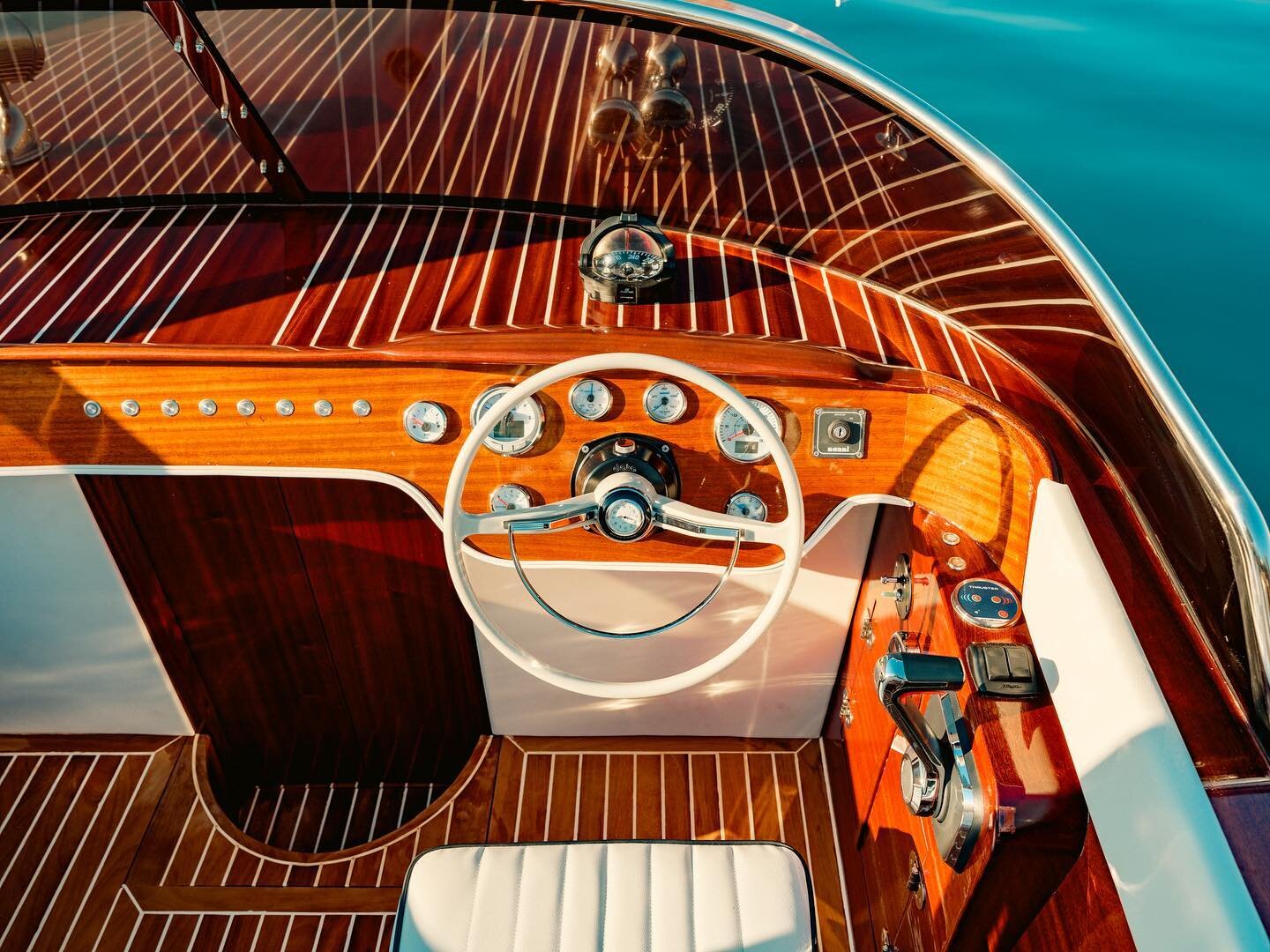
Teak decks and classic helm station of the Aurora 27

The fit-out

Systems below, teak above

While the shell shines, the inside fills: engine, tanks, water and electrical systems integrated with the same standard of material and workmanship as the joinery that will hide them. Then teak goes underfoot, leather goes on the benches, and the dials get their bezels.

The yard runs new builds and its maintenance & refit floor side by side — the same hands that build a Frida keep her, and other yards' boats, in launch condition.

In the detail

Full systems integration · teak decks · hand-stitched upholstery · maintenance & refit service on site

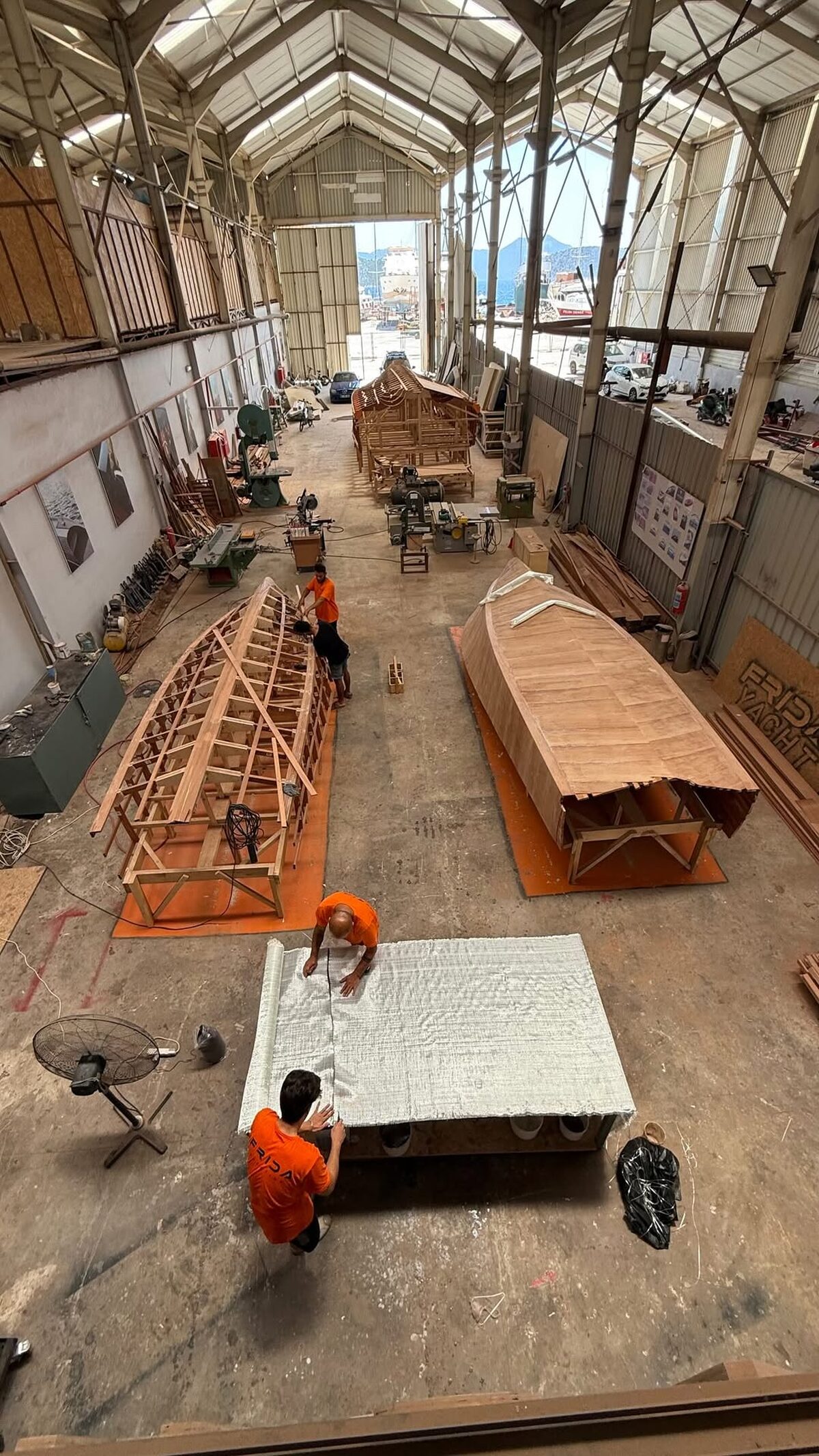
Bird's-eye view of the Bozburun shed with two hulls in build

The place

Bozburun, a village that builds boats

The yard began under a tent and now works from its own tersane in Bozburun — the Aegean village that has launched wooden gulets for a century. Three boats share the floor today, watched from the office window and by twenty thousand followers online.

Students visit, old masters drop in to look and stay to praise, and every launch is celebrated the old way — stern first, to applause. Come and see; the sawdust is complimentary.

In the detail

Own shipyard since 2024 · 90 min from Dalaman airport · visits by appointment · builds shared live on @fridayacht

See it before you believe it

Visit the yard in Bozburun, or follow any hull currently on the floor — the whole build is shared openly.

Plan by WhatsApp